
Country's biggest mortgage lender HDFC on Tuesday announced a festive offer in line with peers like SBI with home loans starting from 6.70 per cent. Last week, SBI as part of festival bonanza offered a concessional home loan rate of 6.70 per cent under its festive offer. This was followed by other lenders like Punjab National Bank and Bank of Baroda.

India's industrial production contracted by 4 per cent in October, the sharpest fall in 26 months, mainly due to decline in output of manufacturing and subdued performance of mining and power generation sectors, according to official data released on Monday. The Index of Industrial Production (IIP) had grown 4.2 per cent in October 2021. The previous low was (-) 7.1 per cent in August 2020.

Ajit Mishra, vice president, research, Religare Broking, answers your stockmarket queries.

Banks have taken this aggressive posture even as liquidity has become comfortable on the back of increased government spending.

With new private banks in the play, the going could become more difficult for the old-school state-run banks, already losing business and market position, forcing them to think hard towards consolidating and forming larger entities to garner big-ticket deals.

Piramal Enterprises' bid for debt-ridden DHFL received the most votes from lenders at the close of the voting process on Friday, sources said. Piramal Enterprises' bid received 94 per cent votes as compared to 45 per cent for the US-based Oaktree Capital. Voting was done on various parameters, including qualitative and quantitative.

The Union government could target a fiscal deficit of 5.8-6 per cent of nominal GDP for 2023-24, and it should continue its capital expenditure push and look to simplify the personal income tax regime, economists recommended Finance Minister Nirmala Sitharaman and her team during their pre-Budget interaction on Monday. Starting last week, Sitharaman had eight pre-Budget consultations this time. More than 110 invitees representing seven stakeholder groups participated in these meetings, the finance ministry said in a statement. The stakeholder groups included representatives and experts from agriculture and agro-processing industry; industry, infrastructure & climate change; financial sector and capital markets; services and trade; social sector; trade unions and labour organisations; and economists.

Markets end in green with auto, banks on a steady climb.

The 30-share Sensex ended higher by 177.46 points at 28,885.21 and the Nifty gained 63.90 points at 8,778.30.

The five-judge constitution bench headed by Chief Justice DY Chandrachud, which heard their contentions at length, told them they will have to justify the procedure adopted for abrogation as the court cannot postulate a situation "where the ends justify the means".

The 30-share Sensex closed up 34 points at 27,831 and the 50-share Nifty ended up 15 points at 8,356.

Why are investors gung-ho about State Bank? asks Tamal Bandyopadhyay.

Dubai-based billionaire BR Shetty has sued Bank of Baroda (BoB) and audit firm Ernst & Young (EY) in a New York court, accusing them of ignoring fictitious and fraudulent transactions that resulted in NMC Healthcare going bankrupt. Shetty is seeking $8 billion in damages in the suit that also names the top management of NMC Healthcare, and Netherlands-based Credit Europe Bank. A top NMC Healthcare official confirmed the development to Business Standard and said despite several meetings, senior BoB officials in India did not take remedial steps for fear of getting involved in an international ponzi scheme perpetrated by then senior management officials.

Sensex eneded 374 points higher on rate cut expectation from the RBI.

Loans for Indian airlines have dried up as banks have become cautious to lend to the sector.

In the broader market, BSE midcap and BSE smallcap indices underperformed the larger counterparts and ended flat with a negative bias.

India's five leading wilful defaulters are Winsome Diamonds & Jewellery Ltd and associate Forever Precious Jewellery & Diamonds, Zoom Developers, Kingfisher Airlines, Beta Naphthol and Raza Textiles

As a percentage contributor to nominal GDP, PFCE's share was 60.1 per cent in FY23, compared with 59.6 per cent and 60.8 per cent in the two preceding fiscal years. "Although PFCE is expected to grow 7.7 per cent in FY23, we believe it is still short of a broad-based recovery. "The current consumption demand is highly skewed in favour of goods and services consumed largely by the households falling in the upper income bracket. "A broad-based consumption recovery, therefore, is still some distance away," said Sunil Kumar Sinha, principal economist with India Ratings.

The RBI rejection is a second blow to BoB - the lead bank of both companies -- after a Delhi high court order on August 18 stayed a move by BoB and the entire consortium of lenders to classify these accounts as fraud, restraining them from taking any other coercive action till the next hearing.
Bankers said the mammoth task of cleaning up the PSBs and improving their health will be a mammoth task for any chief executive.
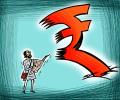
The Centre is staring at a combined shortfall of up to Rs 1 trillion in excise and Customs revenues in the current financial year (FY23) compared to the Budget estimates (BE), mainly because of duty cuts on edible oil and petroleum products. The government set a target of Rs 3.35 trillion for excise and Rs 2.13 trillion for Customs mop-up for FY23 while presenting the Budget in February. "As excise duty collection is mainly driven by diesel volumes, we might see a clear gap in the level budgeted for FY23, following the reduction in cesses on petrol and diesel in May. We are expecting somewhere between Rs 80,000 crore and Rs 1 trillion dip in excise and customs duty collections," a senior government official told Business Standard.

The politically crucial Malwa-Nimar region of Madhya Pradesh played a key role in propelling the Congress to power in 2018 after a gap of 15 years and the party is utilising the Rahul Gandhi-led Bharat Jodo Yatra to strengthen its position in the belt a year ahead of the assembly polls.

According to Merrill Lynch (BofA-ML) report, Domestic capital markets are likely to remain volatile in the September-November period due to factors like US Fed's policy action, second quarter corporate earnings and Bihar state elections.

A consortium of lenders led by State Bank of India (SBI) has agreed to provide loans to Tata Group for the smooth operations of loss-making Air India. Tata Group, which won the bid to acquire the national carrier along with Air India Express and 50 per cent stake in AISATS in October last year, is expected to formally takeover the airline on Thursday. Sources said the SBI-led consortium has agreed to grant both term loans and working capital loans depending on the airline's requirements. All large lenders, including Punjab National Bank, Bank of Baroda, and Union Bank of India, are part of the consortium, they added.

Since its launch in April, helpline 155260 has been able to prevent more than Rs 18.5 million of defrauded money from reaching the hands of fraudsters.

Analysts caution against volatility and recommend buying stocks of companies that are on strong fundamental footing that have been beaten down badly in the recent carnage.

The talk of governance reforms at public-sector banks seems to remain on paper, as a majority of them continue to be working with just a handful board members. Half of the board seat at these banks have been vacant. Ten of the 12 public-sector banks, even large ones like Punjab National Bank, Canara Bank and Union Bank of India - all except State Bank of India (SBI) and Bank of Baroda - don't even have a chairman. In 2014, while splitting the post of chairman & managing director (CMD), the government had decided to appoint non-executive chairmen at these banks. SBI, which has an executive chairman and four managing directors, was an exception.

Before taking such loans, compare the interest rates charged by various players, advises Sanjay Kumar Singh.

Ketan Parekh, an accused in several cases of stock market manipulation, has been convicted by a special CBI court in Mumbai for cheating and sentenced to two years rigorous imprisonment.

The Sensex closed higher by 170 points at 26,128 and the Nifty rose 59 points to end at 7,943.

Mutual funds have ratcheted up Rs 53,700 crore (Rs 537 billion) through new fund offers (NFOs) in 2022 until November, against Rs 1 trillion in Calendar 2021, notwithstanding the number of launches this year eclipsing the 2021 tally. Industry insiders cite the absence of launches in popular categories as the reason behind lower collections this year. Typically, only NFOs in popular categories from major fund houses rake in the moolah.

Ajit Mishra, vice president, Research, Religare Broking, answers your queries.

As the Indian currency hovers around its lowest versus the US greenback, several smaller and mid-sized companies are expected to face rough weather as almost 44 per cent of the foreign loans taken by Indian companies remained unhedged. According to the data sourced from the Reserve Bank of India, Indian companies raised around $38.2 billion in the financial year ended in March. Of this, only 56 per cent of the loans are hedged while the rest of the foreign loans remain unhedged, thus risking the companies to forex volatility.

Post graduate colleges are aggressively tying up with banks to introduce banking courses.

Experts attribute the lower target to increased allocation under the credit guarantee scheme for small businesses. Out of the Rs 3.21 trillion worth loans sanctioned under the Pradhan Mantri Mudra Yojana (PMMY) in the last financial year, Rs 3.12 trillion were disbursed to entrepreneurs, according to official data.

The Securities and Exchange Board of India (Sebi) has just released a proposal to alter the regulations pertaining to the sponsor system for mutual funds. One of the reasons for the proposed changes is that there are two conflicting regulations that need to be clarified. The other reason is that the sponsor system may itself be outdated as it stands, and the proposed changes would allow new entities such as private equity funds and portfolio management services to enter this space.

Retail inflation hit an eight-month high of 6.07 per cent in February, remaining above the RBI's comfort level for the second month in a row, while wholesale price-based inflation soared to 13.11 per cent on account of hardening of crude oil and non-food item prices, government data showed on Monday. The previous high for retail inflation was 6.26 per cent in June 2021. The consumer price index (CPI) based retail inflation, which is taken into account by the Reserve Bank of India (RBI) while deciding its monetary policy, rose mainly because of costlier food items, as per the data released by the National Statistical Office (NSO).

India's exports are unlikely to get an immediate boost from a depreciating rupee, which touched an all-time low on Monday, driven by rising commodity prices. The rupee fell to 76.97 against the dollar earlier in the day, settling 1.05 per cent weaker than the previous close. Oil prices soared to their highest since 2008 on Monday at $139 per barrel, after the US and European allies explored a Russian oil import ban, while delays in the potential return of Iranian crude oil to global markets increased supply fears.

Once these banks start showing losses, they will not be able to pay dividends to the government nor pay taxes, which will further aggravate the situation for the government as its return on investment as an investor would be very negligible for the next few years, says M V Subramanian.

The external environment has worsened further. While the Finnish economy entered into a recession, Swedish economic growth also dipped. The Finnish gross domestic product (GDP) dropped 0.6 per cent in October-December, 2022. It was the second quarter of negative growth, which is a technical definition of recession.
